




What They Take With Them
Changthang, Ladakh, September 2026
I don’t know if the Changpa get tired. I know that I did.
Their days seemed to have no obvious beginning or end. Animals are milked, pens cleaned, goats moved, cheese made, things repaired. If there was any time left, one woman told us, she made carpets. There rarely was.
I had come to Changthang to photograph the Changpa. This is dangerous because the Changpa photograph beautifully.
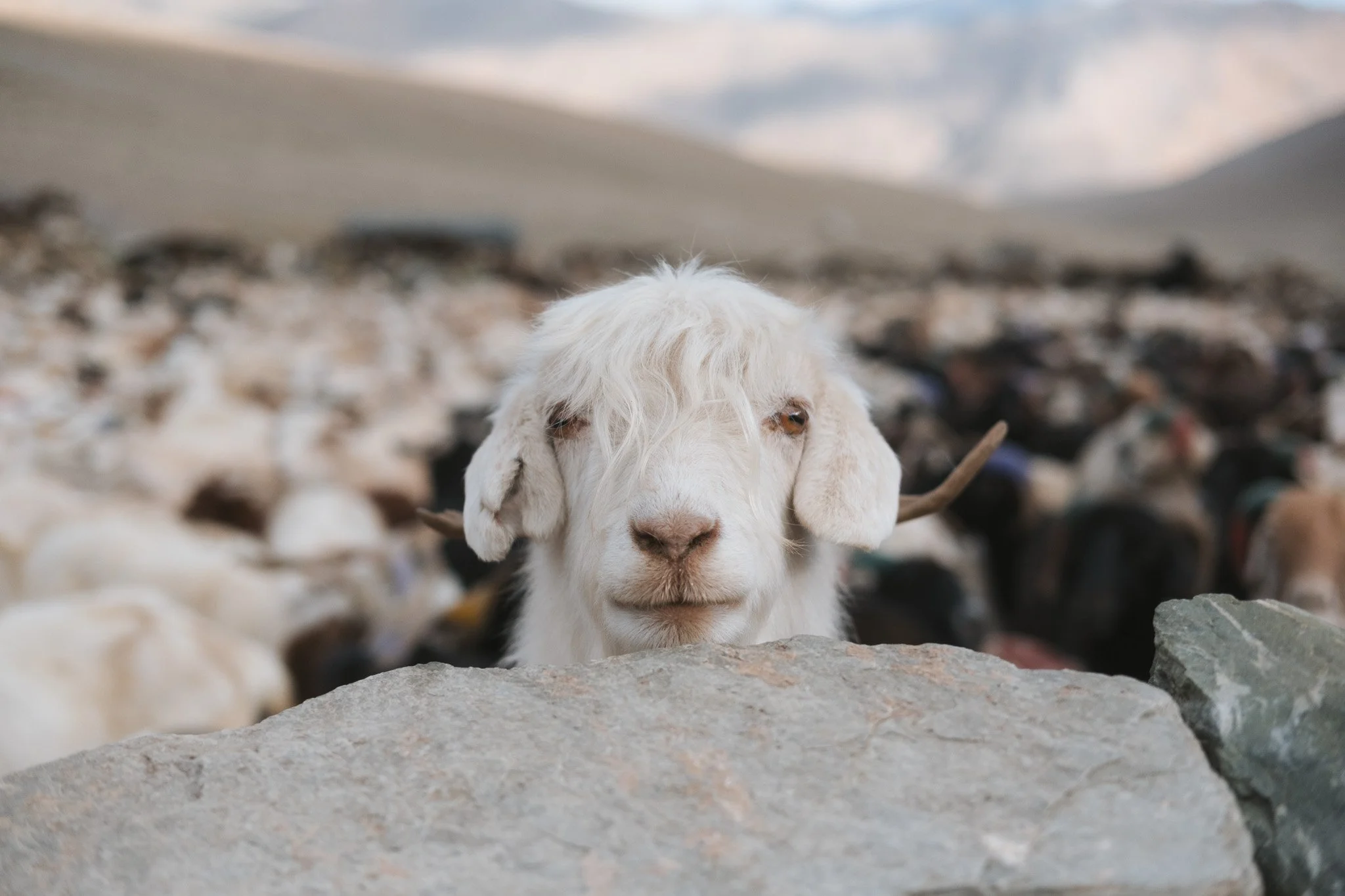
Pashmina goats crossing an empty valley. A black rebo, the traditional yak-wool tent the Changpa call home, against a mountain. The pictures make life look romantic. Hardship is harder to photograph.
Changthang required preparation. I came with a sun hat, sunglasses, fleece, down jacket, sweat-wicking clothes, merino wool for the sharp changes in temperature and two packs of sunscreen. Twenty sachets of Electral in case the altitude dehydrated me.
The Changpa just lived there.
One morning I climbed a small hill to photograph the herds leaving for pasture. By the top, I was panting. Below me, the Changpa were setting off with their animals for a walk of nearly twenty kilometres.
One woman we met in Kharnak had arrived forty years earlier as a bride from Shun, in Zanskar. Her family kept yak. Here, she had to learn sheep and goats. A little more work, she said.
That was all.
Back then, news from Shun came on foot, carried across the mountains by someone who made the journey, or by horse if it was urgent. Today they carry phones, though the coverage is terrible. They know the particular spots in the distant mountains where a Jio signal appears.
There were fewer herders now. Her children had stayed with the herds; her grandchildren were studying in Leh.
She didn’t expect them back.
Her family had suggested replacing her rebo with a modern tent. She refused. The tent was too hot; the rebo had better ventilation. So they repaired the rebo.
Modernity had arrived. She had inspected it and sent it back.
I had thought of the Changpa as a culture tied to a place, when almost everything about their lives suggested otherwise. They move with the seasons, following pasture with their animals; even the rebo comes down, travels with them and goes up again somewhere else.
For some families, movement had taken a more permanent form. I met descendants of Changpa who had come from Tibet after the border closed, leaving behind their grazing grounds and much of what they knew, but bringing their herds with them. Families were settled where they had relatives and began again on the Indian side. They had already moved, adapted and carried what they could.
Travelling with me was the founder of a centre where Changpa women were learning to spin, knit and weave Pashmina. For generations, the Changpa had herded the goats. The fibre left Changthang; much of the work of turning it into finished cloth happened in Kashmir. At the centre, some of that knowledge was moving in the other direction.
He told me that some of the women could barely write their names when they started. That didn’t seem to slow them down. They could look at a knitting pattern and work it out. Now, he said, some were watching YouTube videos and reproducing what they saw.
I assumed the objective was employment. He had something larger in mind.
“If they have to migrate, they can carry the skill with them.”
That sentence stayed with me. Perhaps the question isn’t whether they remain where they are, but what they take with them.
What does it actually mean for a culture to survive?
It can’t mean that nothing changes. We can look at a rebo beneath the mountains and hope it remains there forever, but we don’t have to spend the winter inside it. We can worry that the grandchildren will leave for Leh without having to decide whether our own children should spend their lives herding goats.
We can photograph hardship and call it tradition. Then we can go home.
The woman from Shun kept her rebo because it worked. The women at the centre were learning something new.
A few days in Changthang isn’t enough to understand the Changpa. But it was enough to make some of the stories I had arrived with harder to believe.
Their lives are hard. What surprised me was how little time they spent discussing the fact. There were animals to move, cheese to make, roofs to repair and guests to feed.
I don’t know if the Changpa get tired. I suspect they do.
They just have things to do.
First published in September 2026.